Top 10 web app development companies that also get design right - 2026

Looking for the best web app development company in 2026? Choosing the right partner can be hard, since so many companies offer similar development services.
To make your search easier, we compared 10 of the top web app development companies. We looked at what each one does best, their main services, pricing, strengths, and the types of projects and companies they suit.
Most lists rank these companies on tech stack and price alone. We used one more filter: whether design and user research sit inside the same team that writes the code. A web app development company builds custom, browser-based software applications for a business. The best ones also make sure the product actually works for the people using it, not just technically.
We also cover how these companies price their work, what to look for when choosing one, and the questions worth asking on a call. Whether you're building a new app, redesigning an existing one, or looking for a long-term development partner, this list will help you narrow down your options.
1. UX studio
Helping SaaS product teams build intuitive digital products through research-driven design and development.
.webp)
Best for: Data-driven web app development with end-to-end delivery
Strengths: Embedded teams, strong UX research, full product discovery, in-house development
Known for: Flexibility, direct communication, high-quality work
Downside: Smaller teams
UX studio works with B2B SaaS companies as a fully dedicated web app development partner. With their embedded team model, you get a team that feels like your own, combining deep research, smart design, and development. They simplify even the most complex products, with nothing lost between "what users need" and "what gets shipped."
Unique offerings include:
- Flexible, scalable teams. When you need an extra pair of hands, UX studio has experts ready to jump in. Having a slower period? You can scale down the team easily.
- Deep domain knowledge in SaaS verticals. UX studio onboards very fast. A tried-and-tested discovery process lets them understand complex products deeply, even in high-stakes verticals like healthcare or legal.
- Research and design roles support development. Unlike most development shops, UX studio keeps dedicated researcher and designer roles inside the same team that builds the product. This means the code gets written around real customer insight, not a static spec.
Since their start in 2013, they've worked with partners like Netflix, the United Nations World Food Programme (WFP), Brenntag, and Lupl. They've also built and shipped their own SaaS products (UXfolio, Copyfolio, and Archifolio). You can browse their portfolio here.
If you need an embedded team that offers product design and development services, contact UX studio. They'll get back to you within 24 hours.
2. Studio Graphene
Digital products combining strategy, design and technology
.webp)
Best for: End-to-end digital product development, including AI-focused projects
Strengths: Product strategy, UX/UI design, development, AI expertise
Known for: Large multidisciplinary teams and end-to-end delivery
Downside: Broader agency model with less focus on dedicated embedded teams
Studio Graphene is a digital product agency that combines strategy, design and development. They work with businesses across industries and have a growing focus on AI-powered and AI-native digital products.
Unique offerings include:
- End-to-end product development, covering strategy, UX/UI design, engineering and product delivery.
- A strong focus on AI and emerging technologies, helping businesses explore and implement AI in their digital products.
- Multidisciplinary teams that bring together product, design and engineering expertise for complex projects.
Studio Graphene is a good fit for companies looking for AI-native product development backed with emerging technology expertise.
3. Browser
Research-led digital products built through rapid prototyping and user testing
.webp)
Best for: Research-backed digital products with rapid validation and development
Strengths: User research, UX/UI design, rapid prototyping, front-end development
Known for: UX-focused digital product work and close collaboration with client teams
Downside: More focused on front-end than full-stack product development
Browser London is an award-winning UX-focused agency that combines user research, UX/UI design and front-end development. Their approach is built around validating ideas with real users before moving into development, helping organisations create digital products, services and apps based on evidence rather than assumptions.
Unique offerings include:
- Research-led design, with user interviews, competitor research, data analysis and product audits forming the foundation for design decisions.
- Rapid validation, using design sprints, high-fidelity prototypes and real user testing to quickly test and refine ideas.
- Design-to-development delivery, with front-end development, integrations and user testing handled by the same team.
Browser is a good fit for organisations that need to take designs into front-end development, but can handle the back-end development themselves.
4. Qubika
AI-native digital products powered by deep engineering and data expertise
.webp)
Best for: Enterprise digital products and AI-powered transformation
Strengths: AI and data engineering, product design, software development, cybersecurity
Known for: Large multidisciplinary teams and AI-native engineering
Downside: Broad technology focus may be more than smaller product teams need
Qubika is a digital technology company with 20+ years of experience and more than 1,100 employees. They combine product design, software engineering, data, AI, cloud and cybersecurity to help businesses move from digital-native to AI-native.
Unique offerings include:
- AI-native development, from AI discovery and custom agents to generative AI, machine learning and intelligent automation.
- A broad studio model, bringing together product design, AI, data, engineering, cloud and product management expertise under one organisation.
- Enterprise-grade AI and data capabilities, including 250+ certified Databricks engineers and a strong focus on security, governance and scalable infrastructure.
Qubika is a strong fit for larger organisations looking for a technology partner that can combine AI development with global data protection laws and regulations.
5. Habitat
AI-native digital products combining product design, branding, and motion
.webp)
Best for: Product companies and startups looking for design support across product and brand
Strengths: Product design, UX/UI research, branding, web design, motion
Known for: Combining product and brand design with an internal-team feel
Downside: Primarily design-focused rather than a full product development partner
Habitat is a design company focused on AI-native products, working with startups and product companies across product design, web design, branding, and motion. They position themselves as an extension of in-house teams, helping clients take responsibility for large parts of their design needs and scale support when needed.
Unique offerings include:
- Product design support, covering discovery and research, UX/UI design, prototyping, design systems, user testing, and interface animation.
- Brand-to-product design, extending brand strategy and identity into product design, websites, and digital materials.
- Flexible team integration, with Habitat describing its model as feeling like an internal team while working remotely and scaling design support as needed.
Habitat is a good fit for startups and product companies looking for a design partner that can connect product, brand, web, and motion design.
6. Designli
Turning software ideas into scalable digital products
Best for: Non-technical founders building SaaS, mobile apps, and custom software
Strengths: Product strategy, UX/UI design, software development, AI implementation
Known for: Helping founders move from idea to launch with one integrated team
Downside: Strongly focused on startups and early-stage product development
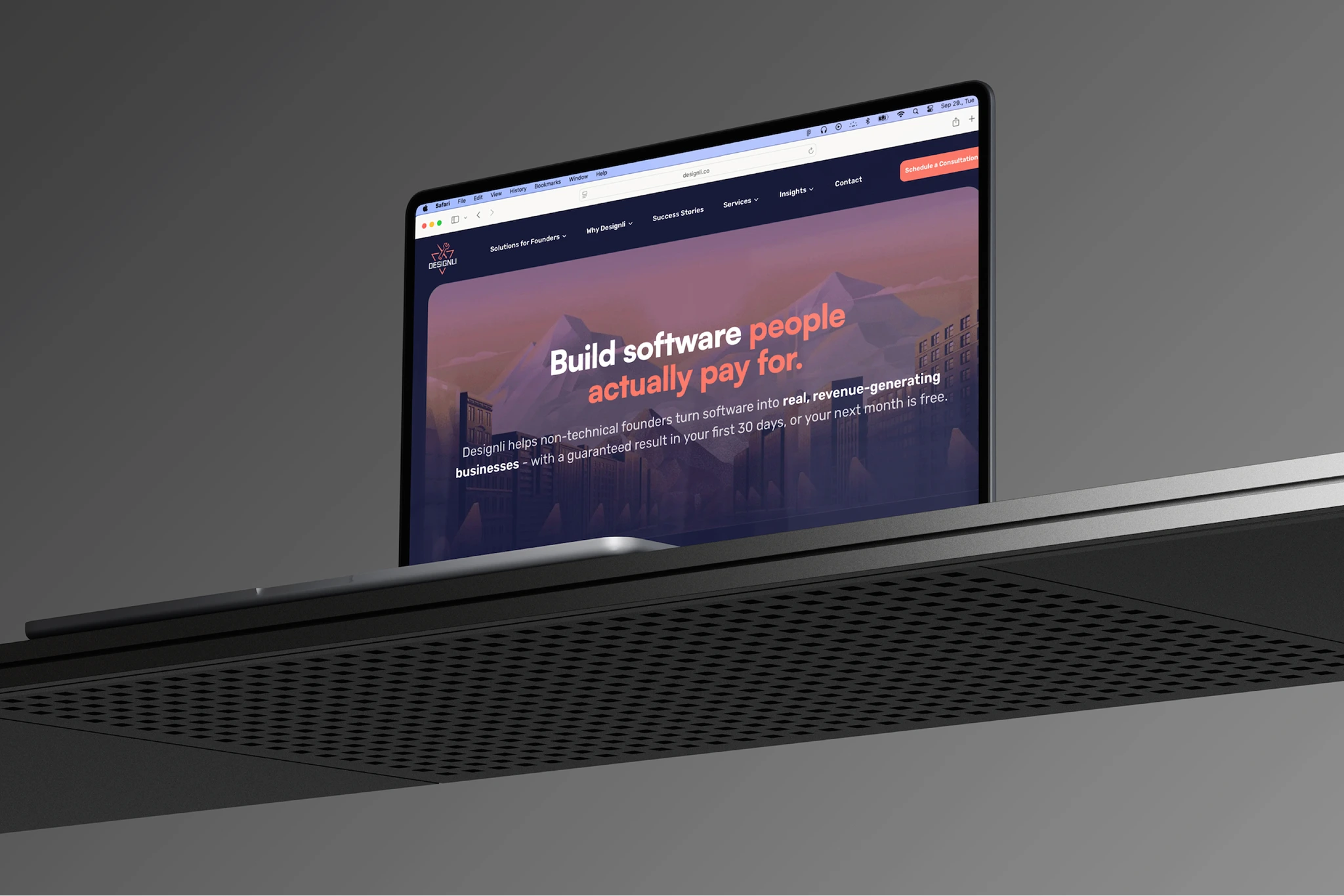
Designli is a software product company that helps non-technical founders turn ideas into working software products. They combine product strategy, UX/UI design and engineering to take products from early concepts through development and launch.
Unique offerings include:
- Product strategy and validation, helping founders define, test, and refine their product before investing heavily in development.
- End-to-end product development, bringing strategy, design, and engineering together throughout the product lifecycle.
- AI implementation, including custom AI agents and AI-powered tools alongside SaaS, mobile app, and custom software development.
Designli is a good fit for non-technical founders looking for a partner to help turn an early-stage software idea into a market-ready product.
7. Gojilabs
Strategy-led digital products designed and built from the ground up

Best for: Companies looking to turn complex product ideas into scalable digital products
Strengths: Product strategy, UX/UI design, software development, AI product development
Known for: Strategy-first product thinking and broad digital product expertise
Downside: Broad product agency rather than a specialist UX research partner
Goji Labs is a strategy-led digital product agency that combines product strategy, design, and development under one roof. They work with startups, enterprise teams, and private equity-backed companies to design and build web and mobile products, custom software, and AI-powered solutions.
Unique offerings include:
- Strategy-led product development, starting with research, discovery, and product strategy before moving into design and development.
- AI product development, covering AI strategy, rapid prototyping, AI assistants, workflow automation, AI UX, and AI-enhanced products.
- Broad product expertise, with experience across 20+ industries including SaaS, healthcare, fintech, education, and enterprise.
Goji Labs is a good fit for companies looking for a strategy-first partner that can take a digital product from early discovery through design, development, and launch.
8. Solveit
Full-cycle digital products built around speed, scalability, and business results
.webp)
Best for: Startups and businesses building mobile or web products
Strengths: Product discovery, UX/UI design, mobile and web development, AI development
Known for: Fast MVP delivery and full-cycle software development
Downside: More development-led than research-led
SolveIt is a full-cycle software development company working with startups, SMEs, and enterprises. They cover the product journey from discovery and UX/UI design through web and mobile development, AI, launch, and post-launch support.
Unique offerings include:
- Fast MVP development, with SolveIt stating that it can launch fully functioning MVPs within three months.
- Product discovery, helping validate ideas, define scope, identify risks, and establish the product roadmap before development.
- AI-powered development, including generative AI integration, alongside web, mobile, and cross-platform development.
SolveIt is a good fit for startups and SMEs looking to launch fast with a strict budget.
9. Halo Lab
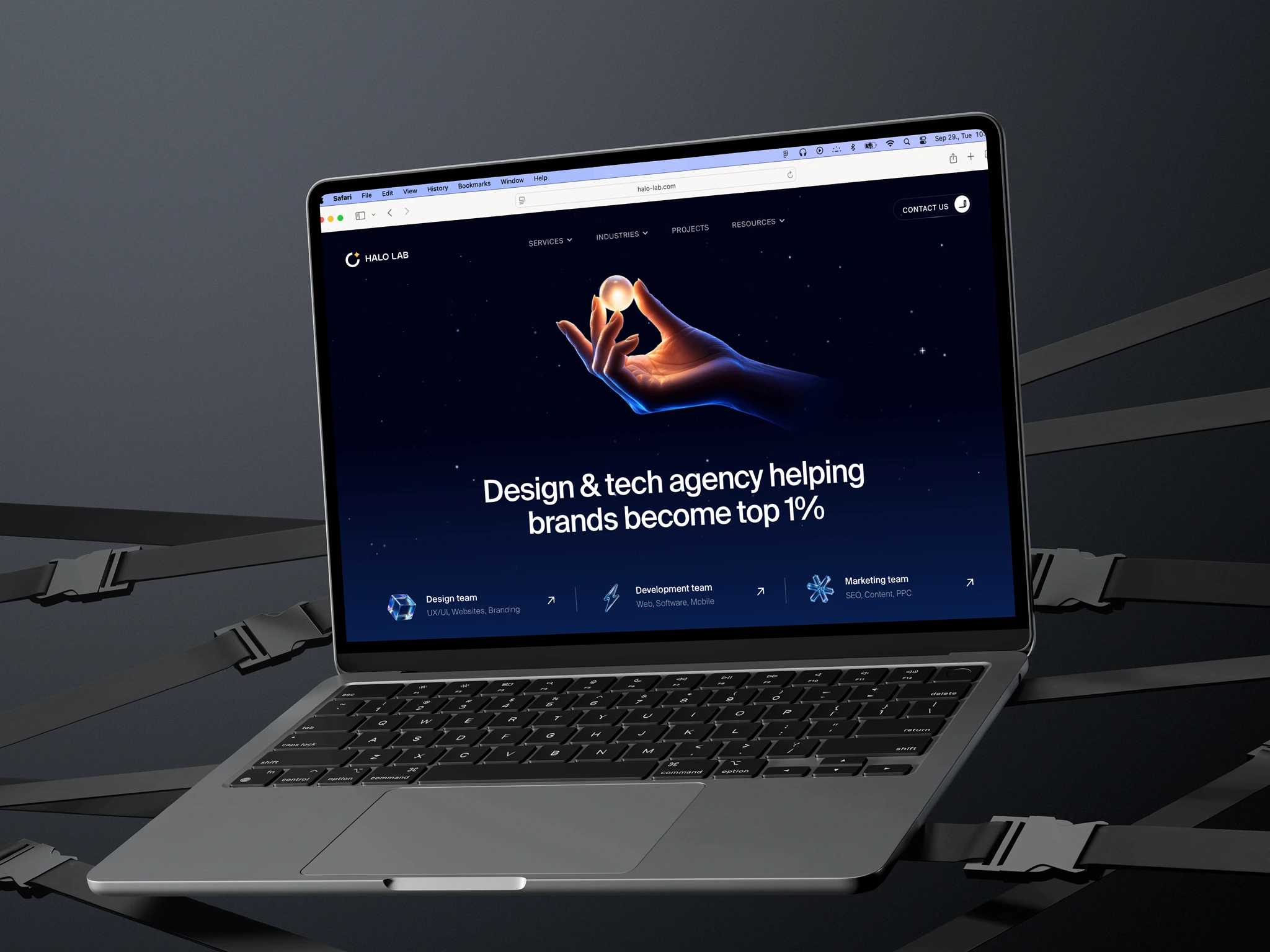
Design & tech agency helping brands become top 1%
Best for: Web-focused startups needing fast launch
Strengths: Web and mobile UI design, branding, front-end and full-stack development
Known for: Bold visual identity work, quick time-to-market
Downside: Less emphasis on UX research or strategic product development
Halo Lab is a design and tech agency, founded in 2010 and now headquartered in New York, that combines UI/UX design with front-end and full-stack development. Their dedicated teams are built to speed up the design process and get startups launch-ready within weeks, rather than positioning as a deep-research strategic partner.
Unique offerings include:
- Cloud-based services with bespoke development, pairing design output directly with a working build.
- Free expert workshop, lowering the barrier for startups to get initial direction before committing to a full engagement.
- Simple, fast solutions, built around speed to launch rather than extended discovery phases.
Halo Lab is a good fit for healthcare innovators looking for expertise in clinical AI, medical devices, digital therapy, and patient-facing products.
10. Adchitects
Full-cycle digital products built around bespoke design and development
Best for: Founders and marketing teams building premium websites, e-commerce stores, and web apps
Strengths: Website and app development, SEO and conversion optimization
Known for: Award-winning visual work and a strong quality-to-cost ratio
Downside: More website and marketing-site oriented than a dedicated B2B SaaS product partner
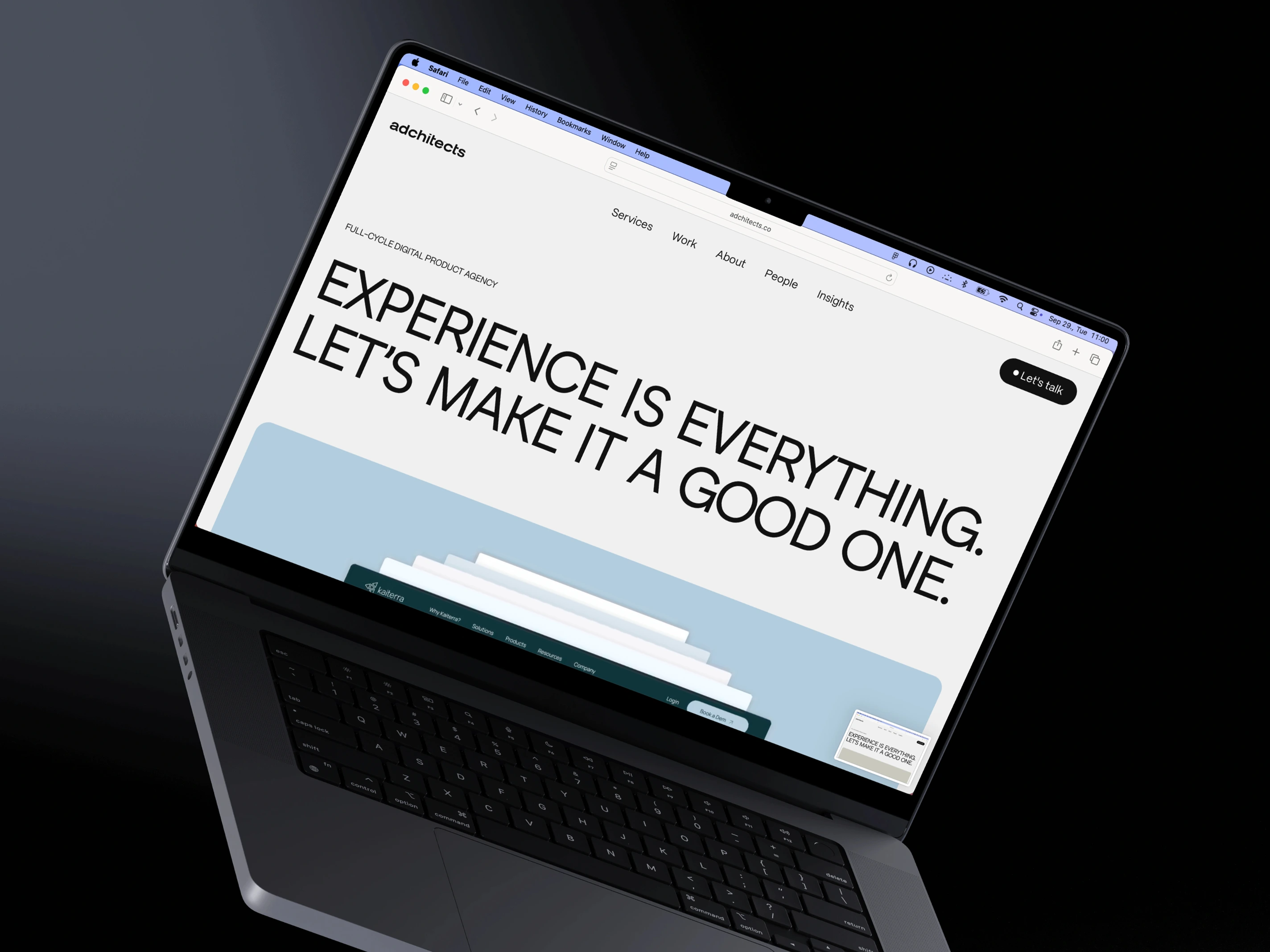
Adchitects is a full-cycle digital product agency covering the whole cycle from ideation through design, development, and ongoing maintenance. They work with founders and marketing teams on bespoke websites, e-commerce stores, and web apps, with responsive design, UX, and SEO built into every product rather than added afterwards.
Unique offerings include:
- Full-cycle delivery under one team, from discovery, UX research, and usability testing through UI design, development, and post-launch maintenance.
- In-house-only teams, with each project staffed by full-time, largely on-site specialists — no freelancers or subcontractors — and direct client access to designers and developers alongside a dedicated project manager.
- Flexible engagement models, working on both a project basis and retainers, with retainers starting at $4,000/month and full website projects typically from $15,000.
Adchitects is a good fit for founders and marketing teams looking for a partner to design, build, and maintain a premium website or web app.
Summary
To help you compare the listed web app development companies above, we created this table so you can see the main differentiators all at once.
How to choose a web app development company
Price is only one part of selecting a web app development company. Below, we list four of the most important criteria you should consider, plus one that almost every list skips: design and research, so let’s start with that.
1.Design and research
When it comes to development, the first thing that comes to mind is the tech stack. But building a good digital product lies on the foundations of understanding the users and creating a user experience that sticks. With a great user experience comes visual cohesion, using the right color schemes and font sizes, keeping in mind accessibility guidelines and visual hierarchy.
You should only skip this step if you have your own UX team and you can provide tested and iterated final designs to the developers.
When reviewing product design and development services, ask yourself: does design sit inside the same team that writes the code, or is it outsourced or skipped?
Look for:
- A dedicated researcher or designer on the team, not just developers interpreting a spec
- A discovery phase involving user feedback and validation, before development starts
- Willingness to push back on scope based on user needs and validation, not just build exactly what's asked
A company that only builds to a spec (without its own research or design process) is more likely to ship something technically correct but disconnected from how people actually use it.
2. Cost and value
Web app development companies usually price their work in three different ways: time-based, fixed-price, or ongoing retainer/embedded-team. The right model depends on how clearly defined your project is and how much flexibility you need along the way.
When reviewing pricing and engagement models, ask yourself: are you paying for a clearly defined outcome, the time and expertise of a team, or ongoing access to development capacity?
Look for:
- Transparent pricing that makes it clear what is included, what is not, and how additional work is charged
- A pricing model that matches your project's level of uncertainty: fixed pricing for well-defined scopes, time-based pricing when requirements are likely to evolve
- Clear rates and team composition if you're paying based on time, so you understand who is working on the project and at what cost
- For ongoing partnerships, a retainer or embedded-team model that gives you predictable access to a dedicated team rather than repeatedly scoping individual tasks
As a rough 2026 benchmark, development rates can range from around €45–60/hour in Eastern Europe to €70–150+/hour in Western Europe, with US agencies often charging $75–200+/hour and premium consultancies considerably more. Fixed-price projects can range from €10,000–30,000 for smaller MVPs to €60,000–200,000+ for complex enterprise applications.
The important thing isn't simply finding the lowest rate. A cheaper hourly rate can result in a more expensive project if the team needs significantly more time, while a fixed price can create problems if the scope changes. Look at the pricing model alongside the agency's process, team structure, and ability to adapt as the product evolves.
3. Proposal and Project Plan
Cost is only one factor to consider when you are evaluating proposals. The most important question is if the proposal is custom-made for your project. Naturally, to expect a tailor-made proposal, you should also provide sufficient information for the digital product agency so they can assess your needs best.
When reviewing the proposal, ask yourself: does it reflect the specific needs that you've already discussed with them? If it feels vague or generic, your project may be in better hands elsewhere.
Look for:
- Transparency, from scope to pricing and availability
- Clear deliverables, tied to a business goal discussed with your team
- Flexibility, because requirements change
- Ownership terms: who owns the codebase, and what handover looks like
4. Process
The development process is fairly standardized across companies, so at first glance you won't notice major differences. You'll likely see discovery, architecture planning, sprints, testing, and iterations among most offerings.
When reviewing processes, ask yourself: do they value client input as part of their process?
Look for:
- Proactivity in the planning process
- Kickoff workshops to get to know your business
- Iterative sprints, so they can implement feedback quickly
- Presenting alternatives during meetings, not just executing the first idea
5. Portfolio and case studies
Experience with your domain or industry can be a good sign when choosing the right web app development company, but it shouldn’t be a deal-breaker. Case studies (when executed well) are exceptionally good for you to evaluate the thinking process and approach of the product development agency. When the process leaves room to gain domain knowledge, direct industry experience is secondary.
When it comes to portfolio and case studies, ask yourself: are there any elements in their case studies that I look for in the collaboration?
Look for:
- Process descriptions and roadmaps
- Provided services and team setup
- Measurable results
- Case-by-case solutions tailored to client problems, not template-like portfolio items
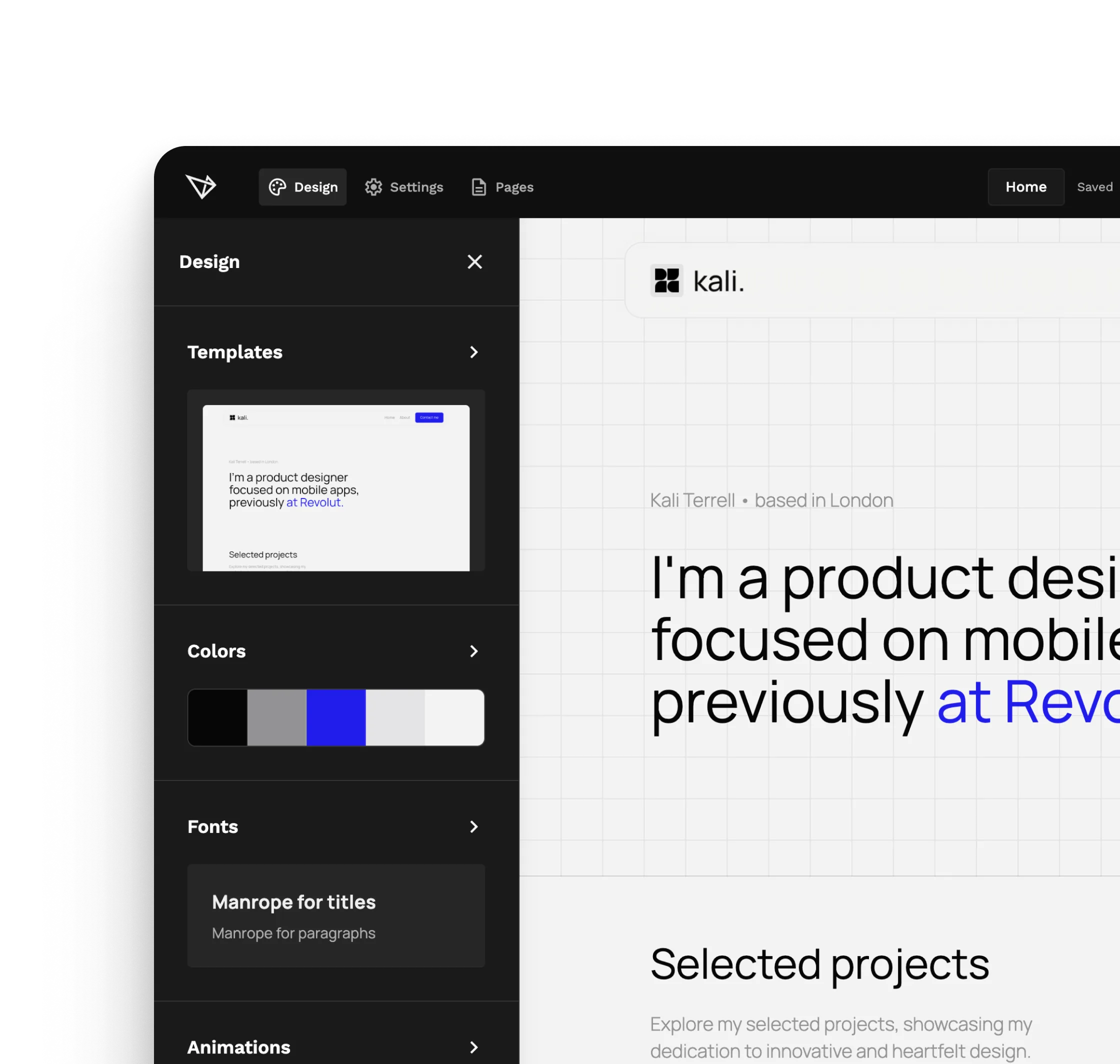
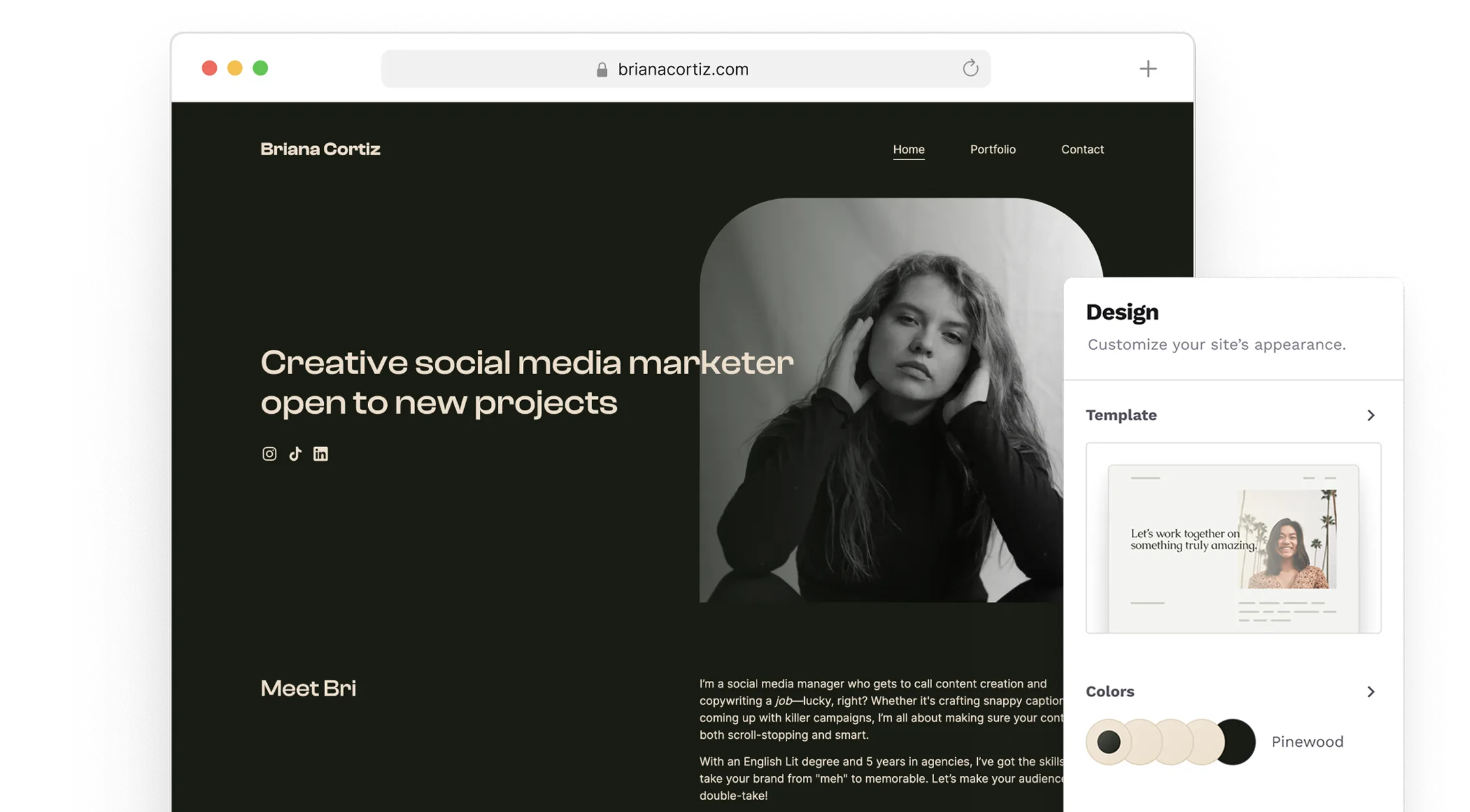
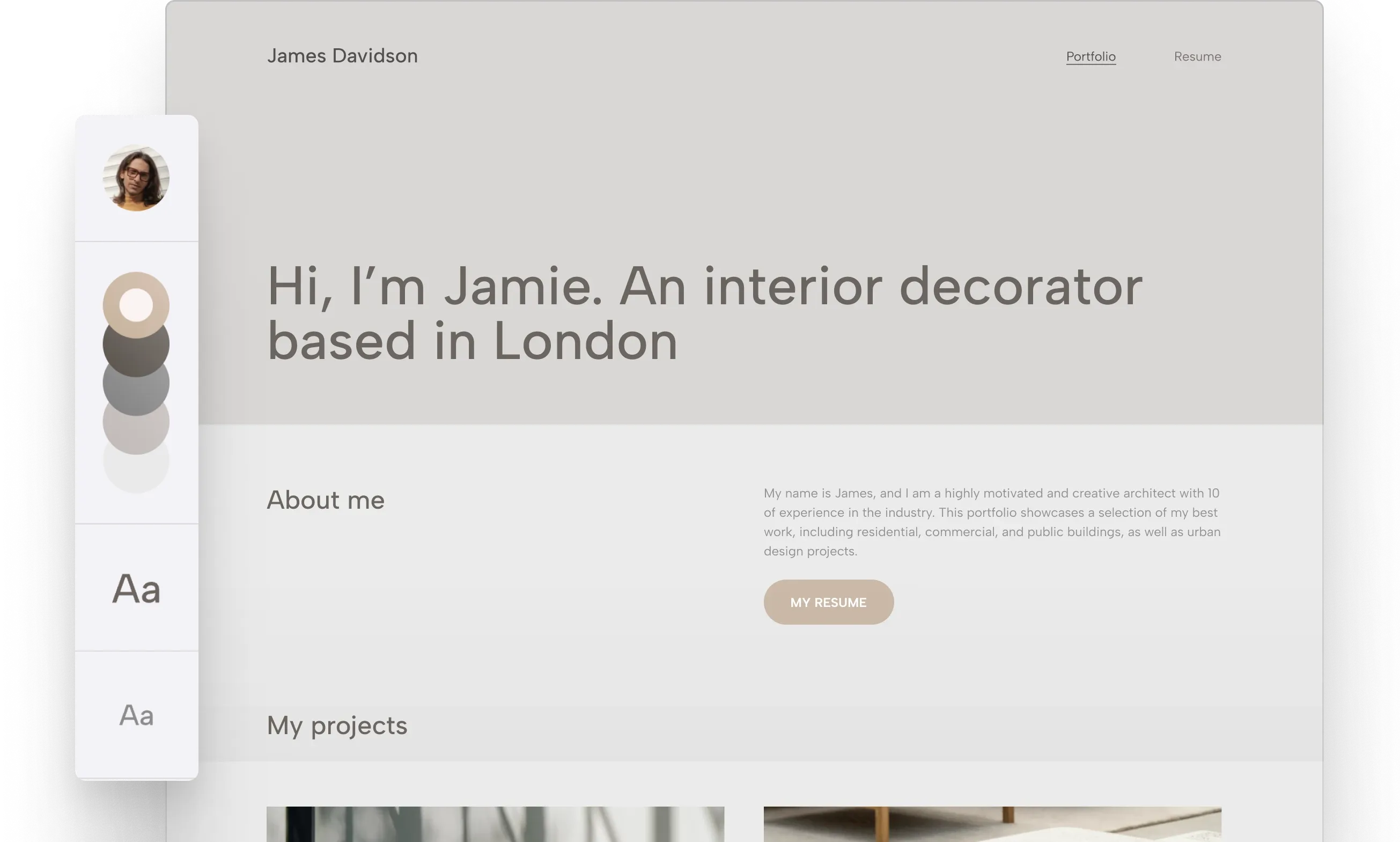
Web apps built by UX studio



What to ask on calls from web app development companies
Client calls are the best opportunity to dig deeper into the web app development agency evaluation and look behind what you see on their website, social media, or portfolio items. Below, we collected the top 5 questions to ask if you want to get the most out of a meeting.
Ask: does design sit inside your development team, or is it separate?
Building based on specs and making sure that your product will actually function is a must when it comes to development. The differentiation comes when we examine the relationship between design and development. When design and development work in the same team, there is a good chance that your user experience will be taken care of, and there is a strategic approach behind how your interface looks and functions.
The commonly cited rule of thumb by Tom Gilb’s Principles of Software Engineering Management is that a usability issue costs about 10 times more to fix once development has started, and up to 100 times more once it's already shipped.
Ask potential partners directly whether design and development sit under one roof, or whether "design" just means a handoff document they received once.
Ask: will the team work full-time on my product?
In some agencies, team members are working on multiple projects simultaneously. Though this can be a standard practice in some cases, a dedicated team can ensure project progress and clear priorities.
There are some cases where less dedication or resource in enoguh, when there are some smaller, well-defined tasks or just low-involvement support is needed. When you are developing new features or a brand new application, continuous progress and undivided attention are a big plus.
Industry research backs this up directly. Google's 2024 State of DevOps report, based on over 30,000 software professionals, found that unstable priorities cause real, measurable drops in productivity, and that this holds true even for teams with strong leadership and good documentation.
There's also a practical difference in how shared teams versus dedicated teams experience your product: a team split across multiple clients moves on before they see the long-term consequences of what they built, while a dedicated team watches your product's quality evolve and can catch and fix problems as they emerge.
Ask: what happens before a single line of code gets written?
A development team can build exactly what is specified and still end up building the wrong thing. Research helps uncover what users actually need, where they struggle, and whether a proposed solution makes sense before time and development resources are invested.
This becomes especially important when you are building a new application, introducing complex functionality, or making decisions based on assumptions about your users. A research process can help validate these assumptions before they become expensive development decisions.
Ask potential partners how they validate product decisions before development starts. Do they have dedicated researchers who can talk to users, test concepts, and identify usability issues? Or does the development team mainly work from requirements and specifications provided by the client?
You don't necessarily need a full research phase for every feature. But having research capabilities within the team means you have a way to answer the question of what should we build?, rather than only how should we build it?
Ask: how can I support the development team in their work?
Outsourcing the development or design of your digital product doesn't mean you can sit back until the end of the process. You're the key stakeholder; you know your business best. Not just your decisions, but your input and feedback are needed along the way.
Product teams usually hold weekly or daily meetings to work through emerging questions and decision points. Some companies run this mostly live, expecting you on calls where your input matters. Others lean more asynchronous, sending recorded updates or written questions you can respond to on your own time. Neither is wrong, but it's worth knowing which one you're signing up for, and whether it matches how available you can realistically be.
Whatever the format, the core need stays the same: giving feedback and ideas on time, and making the call when you're asked to. It's much harder to keep up progress when the team has to circle back to the same decisions or topics over and over. If you want to move fast, be present and give timely feedback, in whatever form that takes for your team.
Ask: who owns the codebase, and what does handover look like?
This is one question worth asking directly, since it isn't always a given by default. Under most copyright law, the developer who writes the code owns it unless the contract includes a clause assigning that ownership to you, so make sure this is spelled out clearly before work begins, not assumed.
In practice, ownership is usually transferred to the client once this is agreed. Look for a partner who backs this up with a proper handover. A dedicated call to walk through the files, confirm you have access to everything, and make sure you know where to find what you need and can maintain the materials yourselves once the collaboration ends.
Though asking the right questions matters, most clients make the mistake of using this call like a job interview and ask an excessive amount of questions to help them evaluate fit. Besides your evaluation, this call is also an opportunity to set your needs and expectations and share more information on your project scope. Use this opportunity to brief the web app development agency as best as you can, because it will determine the quality of the proposal you’ll get.
If you created an RFP beforehand, provide an opportunity for the development agency to ask questions and clarify scope. If they don’t have any follow-up questions, it can be an indicator of the depth of the proposal that you’ll get.
How to create an RFP for web app development companies
When you don't have the time or resources to evaluate companies in depth or join multiple calls, sending out a Request for Proposal (RFP) is often the next step.
Creating an RFP and actually taking the time to think through what you need is a beneficial exercise for your internal team as well.
- It can help you get aligned internally to avoid misalignment between stakeholders and team members;
- can give you a chance to carefully evaluate your needs and organize them into a priority order;
- and it also gives you a great evaluation template to evaluate invited agencies against the same criteria.
This will help not just the process but the final decision as well.
A strong RFP for a web app development company includes:
- Intro: Your business challenge, what you need built, and why you're seeking a development partner
- Stakeholders: Who's going to be involved, including any internal engineering or product contacts
- Technical requirements & assets: Current tech stack, integrations, existing codebase (if any), and any technical documentation
- Design assets (if available): Existing designs or style guides, useful context, but not required if design isn't defined yet
- Budget: Even if approximate, sharing more helps companies create realistic proposals
- Timeline: Dates for RFP due, selection, and kickoff
- Deliverables: Phases and milestones
- Current stats: Traffic, performance, or technical constraints, if you have them
- Evaluation criteria: What matters most to you: technical depth, process, cost, and whether design capability is built in or would need to be sourced separately
- Submission guidelines: Where, how, and what to send
In their responses, companies will usually focus on your main objectives, milestones, available resources, and the overall scope and complexity of the project.
What is a web app development company?
A web app development company builds custom, browser-based software applications, as opposed to marketing websites or native mobile apps. But if you're looking to hire one, the more important question is how they build them.
Does a designer and researcher work alongside the development team from the start, helping shape the product based on how real users work? Or does "design" simply mean a set of screens handed over to developers once the requirements are already defined?
That distinction matters because building a web app isn't just about making the code work. The team also needs to make sure the product makes sense to the people using it.
That's the lens we used for this list. We didn't just look at the technologies companies use or the types of applications they build. We specifically looked at how closely research, design, and development work together, and whether design remains part of the process beyond the initial handoff.
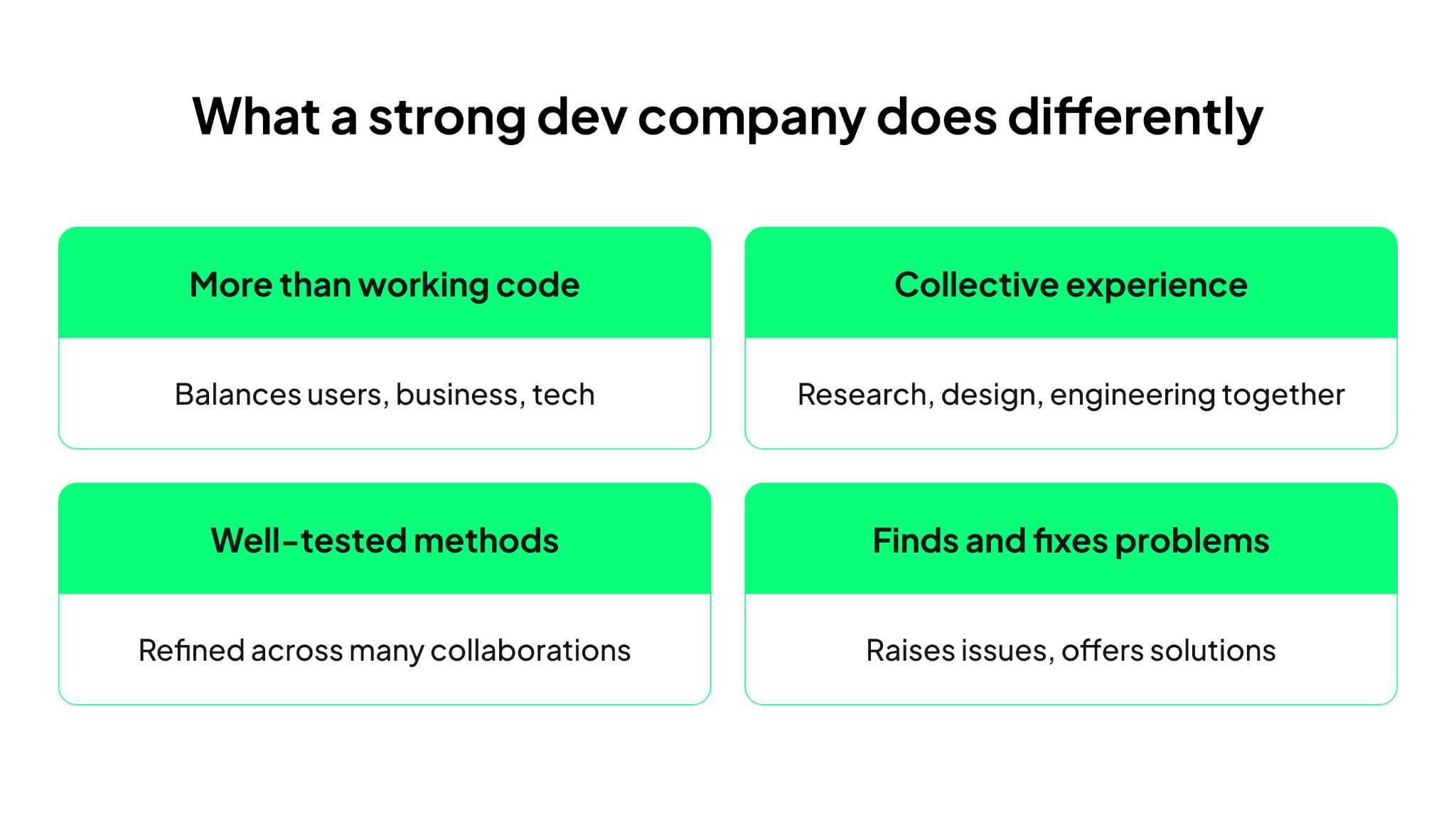
What does a strong web app development company do differently?
They build more than working code.
Development brings together engineering, business, and user psychology. The strongest companies build products that balance what users want, what your business needs, and what the technology can realistically do, not just what a spec describes.
They bring in collective experience.
A development team isn't just a group of engineers working in parallel. The best ones combine research, design, and engineering perspectives, reviewing each other's work and catching problems a single discipline would miss on its own.
They rely on well-tested methods.
Companies with years of experience have refined their process across hundreds of client collaborations, which shows up as faster onboarding and a playbook they can adapt to your specific product, rather than starting from zero each time.
They find and fix problems, not just build to spec.
A good team does what it's told. A great one goes further: when they spot usability issues, technical debt risks, or gaps in the original spec, they raise it and offer solutions instead of quietly building it exactly as written.
How to measure the business outcomes of a well-designed web app
When you work with a web app development company, don't just track whether the app works. Connect the outcome directly to business results.
- Define baseline business metrics (conversion, retention, support tickets, time-to-market)
- Benchmark the current experience (usability tests, analytics, surveys)
- Measure the "delta" after the new app ships
- Translate improvements into revenue gains or cost savings
Business KPIs to track:
- Conversion rate. E.g. a redesigned signup flow increases trial starts from 3% to 6% of visitors.
- Retention / churn. E.g. improved onboarding reduces drop-off in the first weeks.
- Support tickets. E.g. a clearer dashboard reduces support volume.
- Task completion time. E.g. an internal tool redesign cuts onboarding time from weeks to days.
- Error rates. E.g. fewer failed transactions or input mistakes after a research-informed fix.
Tip: Define these KPIs before starting with a company, so both sides are aligned on what "success" actually means.
Searching for the right web app development partner?
You've seen what the best companies do differently: design and research sit inside the team, not outside it. If that's what you've been missing, Let's talk.

